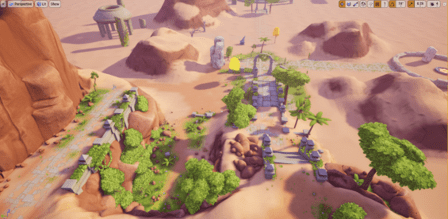
Overview
The Oasis was a collaborative project created for a Prototype Game Development class at Academy of Art University. We were given half a semester to ideate, design, and develop the game. It is a 3D third-person adventure puzzle game in which you take control of the Spirit of Fire and claim the Pearls of the Ancients by solving puzzles. Along the way, you will encounter other spirits who inhabit the oasis.
Basic Details
Finished in early 2022, school project.
Roles: Game Designer, Game Writer
Lead responsibilities: game writing and dialog, voice direction
Shared responsibilities: story development, game design, design documentation, level design, puzzle design, scripting and implementation in Unreal, voiceover
Team size: 6
Genre: 3D Puzzle Adventure
Platform: PC
Made in Unreal Engine 4
My Role(s)
My main roles were game designer and game writer. I prototyped a puzzle, scripted puzzle mechanics and a dialog system, and implemented assets. I also directed and recorded voiceover for the game.
In pre-production, I worked with the team on the ideation process and did much of the design documentation, working with my lead designer. Later, I worked with the the team to refine the layout for the game level and worked on improving the game flow and experience.
After we moved on from the pre-production process, I designed one of the three puzzles featured in the game, which I then iterated on with the team until it reached its final version. I also implemented the first prototype of this puzzle into the game, placing stand-in assets and scripting functionality in Unreal Engine’s visual scripting language, Blueprint (down this page, you can find a link to an interactive snippet of some of the Blueprint I wrote).
Additionally, I helped implement many of the non-environmental game assets and worked out several bugs and issues. I replaced the default player character’s model with a custom model created by our 3D artist and worked out a few issues to ensure it was functional. I also placed the non-playable characters in the game and scripted their interactivity.
Finally, I wrote dialog for the six non-playable characters (NPCs), scripted the game’s dialog system, and implemented all dialog in the game with a basic, functional UI. I cast and directed two volunteer actors to record the lines for four of the NPCs, recording the lines for the other two characters myself.
Early Development
The development of The Oasis was fairly troubled due to limitations of time and budget. The initial concepts for the game were far different from the final version, but along the way we learned a lot about what successful collaborative game development looks like and how to manage scope.
The original idea was to make a game that would fulfill the fantasy of becoming a tomb raider. The player character would battle enemies with a peachwood sword; solve puzzles; jump, crouch, and platform to dodge and avoid traps; and recover and read notes off the corpses of previous explorers. This game was called Tomb of the Emperor. Below is our earliest GDD, which was still in-progress when we presented the idea to our instructor and fellow class members (who were working on their own projects in other teams).
Though I shared game documentation responsibilities with my lead designer, I was in charge of ensuring our documents were readable, complete, and free from major grammatical errors. I also contributed a significant amount of original content to our documents and provided the initial outline for our main game design document (GDD). (I’ll be sharing a more complete GDD farther down the page.)
One of my first design tasks was to do a mental playthrough of my lead designer’s level design for the entire tomb exploration game. Below is their original map, followed by my edits and playthrough notes providing suggestions for improved gameplay.
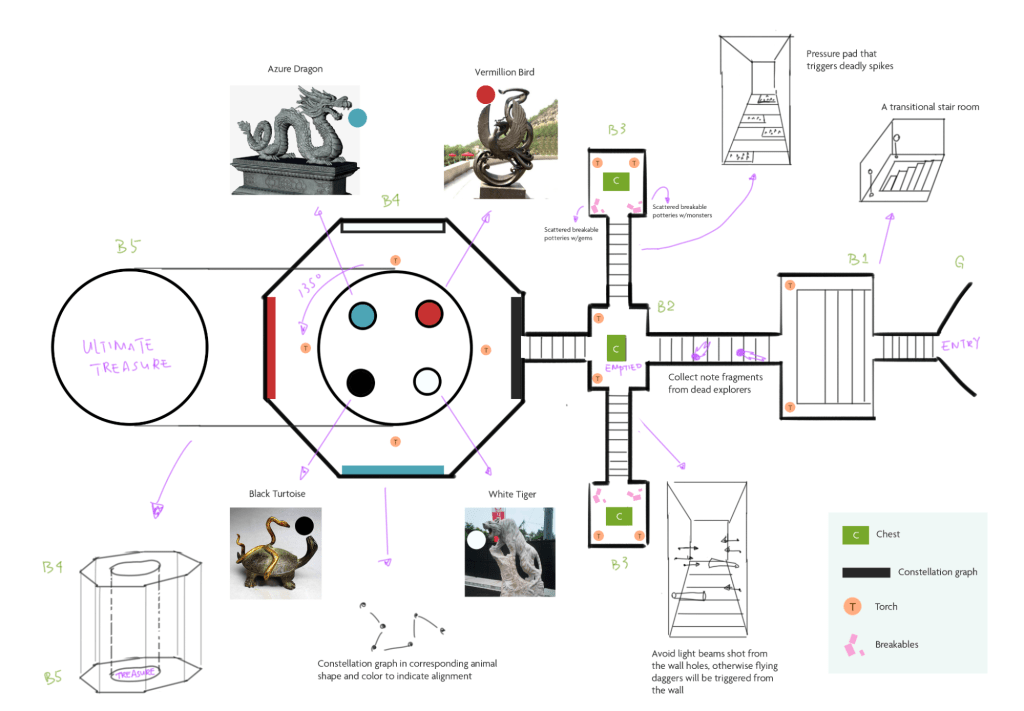
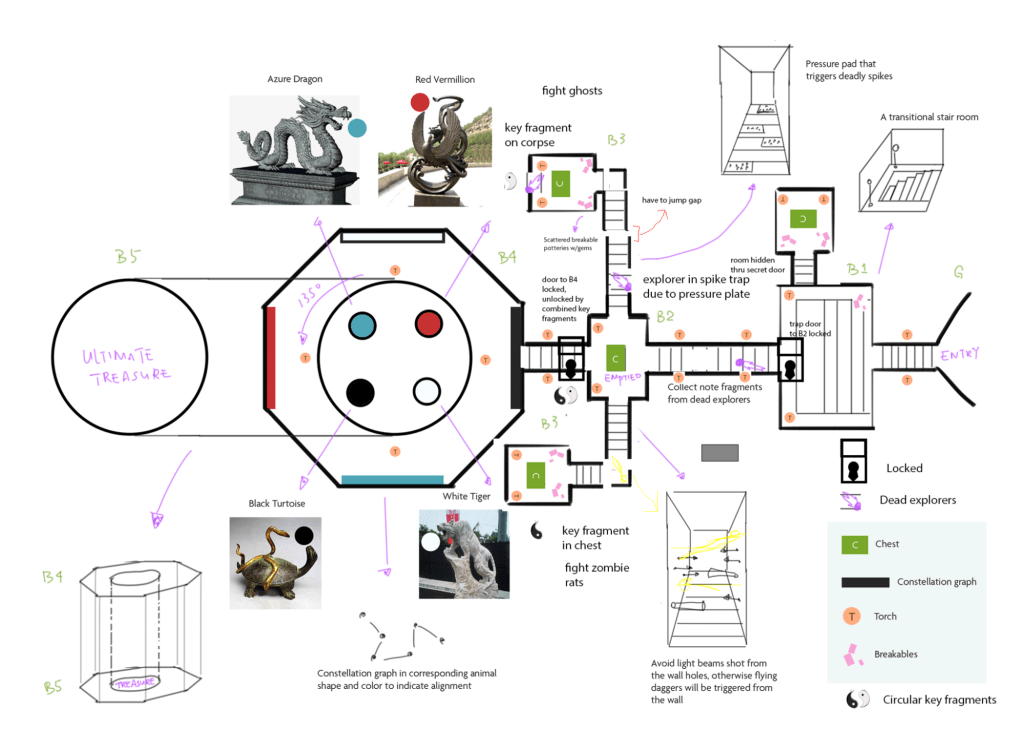
Changes in Design Direction
To implement the features and plan outlined in the above documentation was far too difficult a task to pull off in our allotted time (about five weeks), so we scaled back to a much simpler game focused on puzzle solving and engaging with non-player characters.
The overall design change was also due to changes in art direction that had to be accommodated. Because we had to work mostly with free art assets for the sake of time and budget, it became necessary to adapt the development process to the available assets. Although we did find some dungeon art assets that may have worked, they didn’t fit with the original ancient Chinese setting of our imagined game. We shifted to a more open, environmental feel, which meant that the entire concept of the tomb raider fantasy had to be reworked.

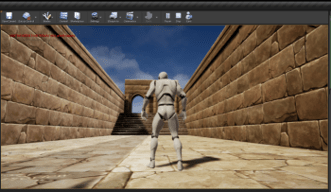

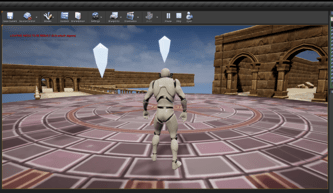
At first, our level design was meant to portray a gloomy, underground dungeon, so the idea was to create small rooms where the player would fight a few monsters and enclosed corridors with several well-placed traps. Thus, the player pathing would be straightforward, as they would need to navigate corridor by corridor.
However, the change to an above-the-ground open-air setting meant that there were no longer rooms, corridors, or walls to segment the space. Instead, the space became a miniature open world where areas are loosely connected and players have more freedom to explore.
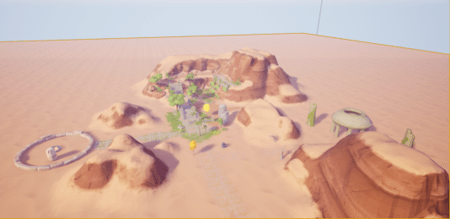
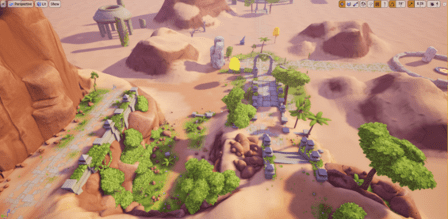

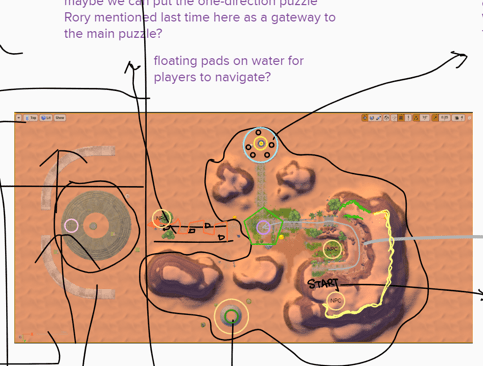
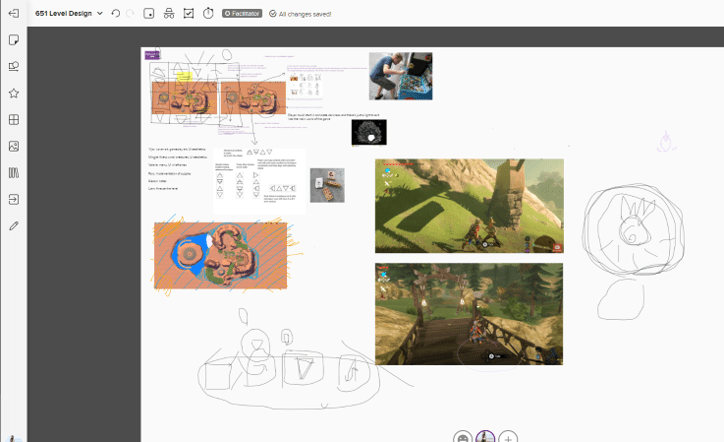
Now, we had to come up with meaningful ways to allow freedom of player exploration while ensuring players could not instantly reach and solve the final puzzle. We eliminated our planned implementation of dungeon traps and underground creatures, cutting combat and advanced movement mechanics. Instead, we decided to make three puzzles that the player would have to solve before finishing the game. Solving each puzzle rewards the player with a pearl that is used at the end of the game to retrieve the ultimate treasure.
Puzzle Design
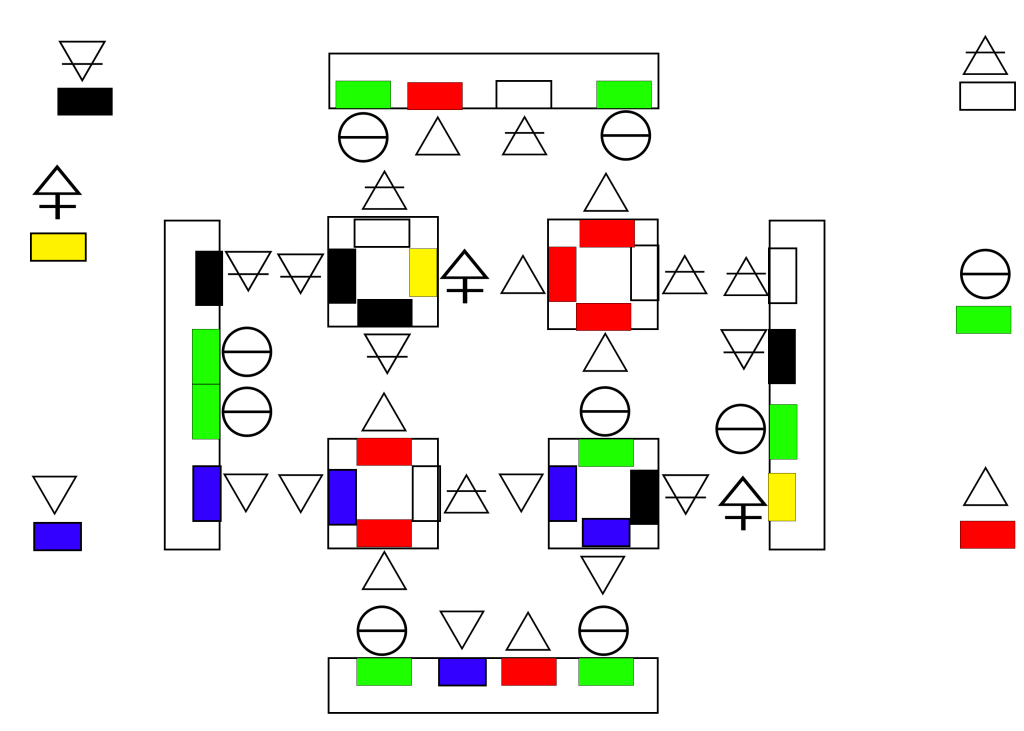
My puzzle made use of a mechanic where the player could rotate obelisks (cubes) by pressing an interact key when in interaction range. The idea was for the player to work out that they were meant to align the alchemical symbols on the faces of the cubes to match with symbols on walls around the central puzzle area. Below is some documentation sharing the puzzle solution, as well as a walkthrough video showcasing the earliest implementation.
Dialog and Voiceover
In order to make the miniature open world of The Oasis more interesting to explore, we decided to put in some non-playable characters who speak to the player character if they move close to them and listen. I was entirely responsible for this aspect of the game. I wrote dialog, created a dialog system using Blueprint, implemented the text of the dialog in-engine with a basic user interface, cast actors and provided them with documentation and direction, and recorded and implemented voiceover audio files.
Below is an initial document I wrote outlining the location of each non-player character “spirit” and planning out the structure for later implementation. In the document, the first spirit’s lines have been translated into Chinese by another team member. We originally wanted to implement a Chinese language option, but ran out of time to make it happen.
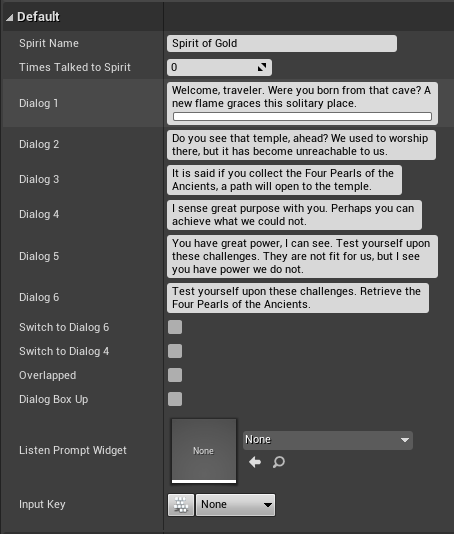
And below is a screenshot showing the variables used for another spirit.
The overall style of writing is purposefully formal to suit the atmosphere of a holy site, but each spirit has a distinct personality. Below is a document I wrote providing direction for each of the voices.
If you scrub through the walkthrough video at the top of this page, you’ll be able to listen to the final voice lines.
Postmortem
Toward the end of the project, I finalized our main game design document to reflect the current status of the project. At the end of the document, I spend a bit of time to ruminate on where the project could go if we were to continue working on it.
One of the final requirements of the project was for each team member to conduct a postmortem. I put together a postmortem writeup after discussion with the team. You can read the original writeup below.
 Rieson Blumer